
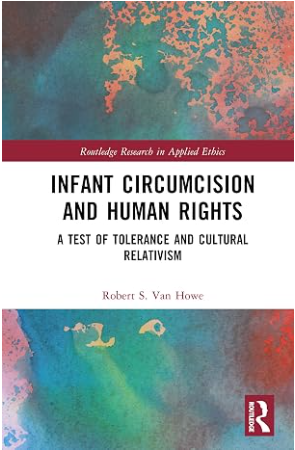
Drawing on over 30 years of clinical experience and extensive research, pediatrician Robert S. Van Howe presents a systematic analysis of one of medicine’s most controversial practices. Infant Circumcision and Human Rights: A Test of Tolerance and Cultural Relativism provides a comprehensive ethical examination of infant male circumcision through the lens of human rights theory.
The 304-page book addresses fundamental questions about moral status, bodily integrity, and informed consent in medical decision-making. Van Howe employs diverse ethical frameworks―from Kantian categorical imperatives to utilitarian analysis―to examine whether infant circumcision constitutes a human rights violation. The analysis includes detailed comparisons with female circumcision practices and a thorough examination of the moral status of infants and whether they are the subject of human rights protections. With clear explanations of bioethical principles and logical fallacies, the book serves both scholarly audiences and educated general readers interested in medical ethics, human rights, and cultural practices. Van Howe offers practical solutions, including delayed consent options, while challenging readers to consider whether this common procedure can be ethically justified in modern liberal societies.
Infant Circumcision and Human Rights is a valuable resource for researchers, students, and medical practitioners working in bioethics, religious ethics, and pediatric medicine.
“A timely and engaging contribution to an ongoing and often overlooked debate, Dr. Robert Van Howe’s thought-provoking and clearly articulated analysis takes a close look at infant circumcision through the lens of individualistic human rights at the intersection of the ethical perspectives of Kant, Dwyer, and Rawls. Challenging long-held and deeply entrenched cultural assumptions, Dr. Van Howe invites scholarly readers to think more carefully about consent, bodily integrity, and social norms.”
Lauren M. Sardi, Ph.D.
Professor of Sociology and
Women’s & Gender Studies
Quinnipiac University


Comments are closed