
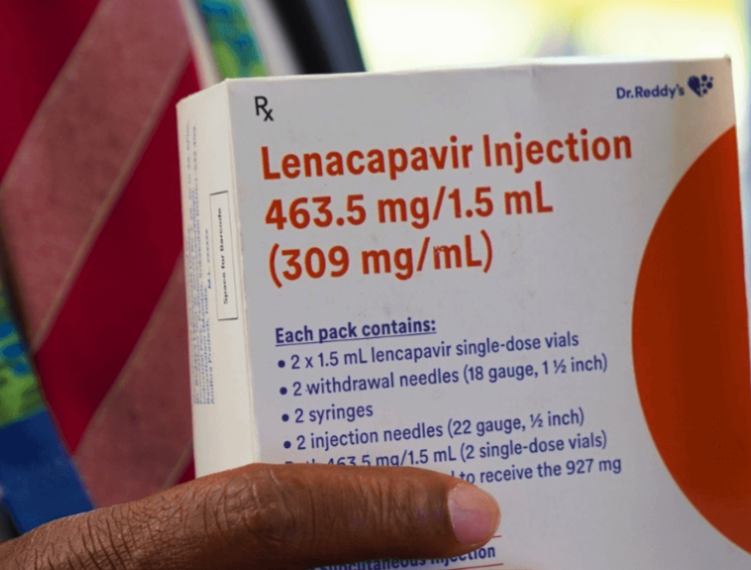
Photo courtesy of Unitaid.org
by Tim Hammond
The development of highly effective, long-acting injectable HIV prevention medication represents a major turning point in the global fight against HIV/AIDS. It also raises important questions about the continued promotion of voluntary medical male circumcision (VMMC) campaigns in Africa and, particularly, the ethical justification for circumcising newborn boys and children who cannot consent to an irreversible surgical procedure.
For decades, public health authorities have promoted male circumcision as an HIV prevention strategy in parts of sub-Saharan Africa, a specious message that has spilled over to the media and general public in the U.S. and other developed nations. Methodologically flawed research from 2002 to 2007 claimed that adult male circumcision reduces the relative risk of heterosexual HIV acquisition in men by approximately 60%. In reality, the absolute risk reduction was closer to 1.5%. While this seemed to be a potential public health benefit in high-prevalence regions, circumcision has never provided complete protection against HIV. It does not prevent all forms of sexual transmission, and circumcised men must still use condoms and practice other preventive measures.
The arrival of a substantially more effective prevention technology challenges the continued reliance on circumcision, especially when the procedure is performed on children who cannot give informed consent.
A dramatic difference in effectiveness
The new medication, lenacapavir, marketed as Yeztugo, is administered by injection just twice a year. In June 2025, the U.S. Food and Drug Administration approved it for HIV pre-exposure prophylaxis, and in July 2025 the World Health Organization recommended it as an additional HIV prevention option.
The clinical results are remarkable:
- Male circumcision: At best an approximately 60% “relative” reduction in heterosexual HIV acquisition among men.
- Lenacapavir: 96% efficacy in preventing HIV infection in the predominantly male population studied in the PURPOSE 2 clinical trial, compared with estimated background HIV incidence.
- Lenacapavir in women: 100% efficacy in the primary analysis of the PURPOSE 1 trial during the 52-week follow-up period. Unlike male circumcision, where women depended on convincing their male partners to get circumcised and use condoms, and where the surgical risks and burdens of circumcision were borne entirely by males, lenacapavir guarantees protection for women by empowering them to take control of their own health.
These figures are not perfectly equivalent measurements: the circumcision figure comes from trials measuring relative risk reduction, while the lenacapavir figures compare infection rates with estimated background incidence. Nevertheless, the results demonstrate the extraordinary preventive potential of the new medication. Unlike circumcision, lenacapavir does not require permanently altering a child’s anatomy.
Millions of circumcisions and a changing public health landscape
Since 2008, more than 27 million voluntary medical male circumcisions have been performed in 15 priority countries in Eastern and Southern Africa. WHO statistics show that approximately 15.1 million additional procedures were performed between 2017 and 2020 alone, based on cumulative program totals. These campaigns have involved enormous public health investments and have included boys and adolescents as well as adult men. There have also been reported cases in Africa of boys being kidnapped from schools and forcibly circumcised without parental knowledge or consent, as well as gangs of circumcised men capturing intact men and forcibly mutilating them.
But public health interventions must evolve as better technologies become available. A surgical intervention offering partial protection should not automatically retain its place when a highly effective, nonsurgical alternative emerges.
There is also an important ethical distinction between an adult voluntarily choosing circumcision for himself and parents authorizing an irreversible operation on a newborn or child who cannot consent. Possibly preventing HIV infection decades in the future is a weak justification for permanently removing healthy genital tissue when autonomous decision-making about safer sex practices will suffice and future preventive options will likely be more advanced and readily available.
The consequences extend beyond HIV prevention
Circumcision permanently removes the foreskin, a specialized, sensitive and functional part of male genital anatomy. Although research does not establish that circumcision generally causes sexual dysfunction, studies and individual reports describe changes in penile sensation, sexual experience and orgasm following the procedure. The possibility of an adverse outcome deserves consideration when the procedure is elective and performed on someone unable to consent.
Moreover, circumcision is not a substitute for condoms. Even circumcised men must continue practicing safer sex, including condom use, because circumcision does not eliminate HIV transmission risk. It also does not protect against all other sexually transmitted infections.
Time to reconsider an outdated intervention
The emergence of lenacapavir fundamentally changes the discussion about circumcision as an HIV prevention strategy. It offers substantially greater protection, requires only two injections annually, and avoids irreversible surgery.
This does not mean lenacapavir is appropriate for newborns or that it is currently available or indicated for every child. Its approved eligibility, access, continued dosing and appropriate HIV testing must be considered. But those limitations make the argument for circumcising newborns even less persuasive: infants have no immediate HIV exposure, and future prevention should be addressed when they are old enough to make informed decisions.
The question facing governments, medical organizations and public health advocates is no longer simply whether circumcision can reduce HIV transmission. It is whether there remains a compelling justification for subjecting non-consenting children to irreversible genital surgery when a substantially more effective preventive technology exists.
Children deserve to grow up with their bodily integrity intact and the opportunity to make informed decisions about their own bodies. HIV prevention should protect children, not require permanently altering them.
Sources and further reading
- Messages about male circumcision aren’t clear: why this is dangerous.
- CDC: Clinical Recommendation for the Use of Injectable Lenacapavir as HIV PrEP (2025).
- WHO: Recommendation for Injectable Lenacapavir (July 2025).
- In the News: VMMC Experience Project
- WHO: Voluntary Medical Male Circumcision for HIV Prevention.
- WHO/UNAIDS: Progress Brief on Male Circumcision Campaigns.
- Long-term adverse outcomes from neonatal circumcision reported in a survey of 1,008 men: an overview of health and human rights implications (2017).

Comments are closed