
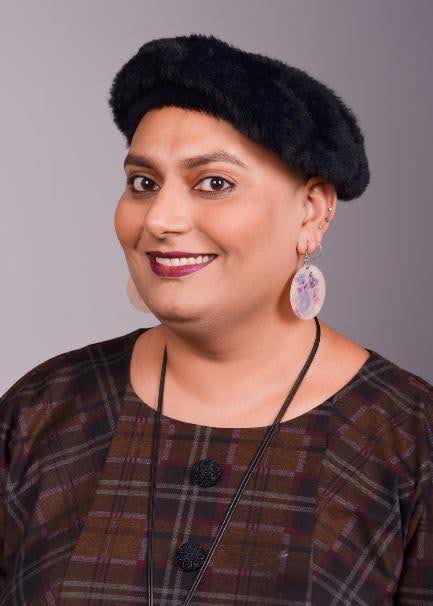
By Lilith Raza
[This is an abbreviated version of an academic manuscript submitted by Ms. Raza to the Journal of Bodies, Sexualities and Masculinities, for a special issue focused on circumcision to be published later in 2026. She has made several addresses at recent WWDOGA rallies, including this one (in German with English subtitles) in 2025.]
Debates surrounding childhood circumcision often focus on religious freedom, cultural tradition, or public health considerations, while the embodied perspectives of those who underwent the procedure remain largely absent from academic discourse. By situating personal testimony within broader debates on children’s rights, bioethics, and transgender medicine, I argue that discussions about circumcision must include the lived experiences of those whose bodies were altered without their consent.
Introduction
Male circumcision is one of the most widely performed surgical procedures in the world and has been practiced for religious, cultural, and medical reasons for centuries (Darby 2015). While the procedure is normalized in many societies, it has increasingly become the subject of ethical debate, particularly regarding children’s bodily autonomy and the question of consent (Earp 2015; Frisch et al. 2018).
Supporters of circumcision frequently emphasize potential health benefits or the cultural importance of religious traditions, while critics argue that non-therapeutic genital surgery performed on children raises serious ethical concerns because the individual undergoing the procedure cannot consent to it (Fox and Thomson 2005). In recent years, scholars in bioethics have increasingly framed the debate in terms of bodily integrity and children’s rights (Earp 2017).
At the same time, discussions about circumcision rarely consider the long-term experiences of individuals who underwent the procedure themselves. This absence is particularly visible in the context of transgender healthcare. For transgender women undergoing vaginoplasty, penile and foreskin tissue are often used to construct vaginal structures, meaning that earlier circumcision may influence surgical possibilities later in life (Horbach et al. 2015; Pariser et al. 2019).
I view this gap through an ethnographic reflection on childhood circumcision and its consequences. Autoethnography connects personal narrative with broader social structures and power relations, enabling researchers to analyze how lived experience reflects larger cultural patterns (Ellis, Adams, and Bochner 2011).
Circumcision, Culture, and the Politics of the Body
Circumcision occupies a complex position at the intersection of medicine, religion, and cultural identity. In many societies, the practice is framed as a normal rite of passage or as a sign of belonging to a religious or cultural community (Darby 2015). Because of this symbolic significance, criticism of circumcision is often interpreted as criticism of cultural identity itself.
However, bioethical scholarship has increasingly emphasized that irreversible bodily interventions performed on children should be evaluated through the framework of autonomy and consent. Fox and Thomson (2005) argue that the ethical tension surrounding circumcision lies in the conflict between parental authority and the future autonomy of the child. Similarly, Earp (2015) suggests that discussions about circumcision often marginalize the perspectives of those who underwent the procedure.
These tensions reveal a broader issue: decisions about bodies are rarely purely medical. Instead, they are shaped by social expectations, religious traditions, and institutional authority.
Long-Term Consequences and Transgender Healthcare
Medical discussions of circumcision typically focus on short-term surgical outcomes or epidemiological considerations. Far less attention has been given to how early circumcision may influence later medical interventions, particularly gender-affirming surgery.
In vaginoplasty procedures used for transgender women, penile and foreskin tissue are commonly used to construct vaginal depth and external genital structures (Horbach et al. 2015). The removal of foreskin tissue through circumcision may therefore limit available material for surgical reconstruction.
Studies of vaginoplasty outcomes generally focus on complication rates and patient satisfaction rather than examining how earlier bodily interventions influence surgical possibilities (Pariser et al. 2019; Bustos et al. 2021). As a result, the relationship between circumcision and transgender surgical outcomes remains largely absent from medical literature.
This absence illustrates a broader pattern in medical research: certain experiences remain invisible when they fall outside dominant research priorities.
From Personal Experience to Political Reflection
Personal experiences of bodily intervention often lead to broader reflections on autonomy and medical authority. Scholars of bodily integrity emphasize that children possess fundamental rights to physical autonomy that should not be overridden without compelling medical justification (Frisch et al. 2018).
However, cultural and religious norms frequently complicate the application of these principles in practice. Practices considered normal within a community may still have significant consequences for individuals who experience them differently.
Autoethnographic narratives provide an important method for examining these dynamics because they allow researchers to connect personal experience with broader social structures (Ellis, Adams, and Bochner 2011).
Conclusion
Circumcision is frequently presented as a routine cultural or medical practice. Yet when examined through the perspectives of bodily autonomy and lived experience, it raises complex ethical questions about consent, power, and medical authority.
Combining autoethnographic narrative with analysis of bioethics and transgender healthcare, highlights how early bodily interventions can shape individuals’ lives decades later. Including these lived experiences in academic and policy debates is essential for developing a more comprehensive understanding of bodily autonomy and medical ethics.
References
Bustos, Sebastian S., et al. 2021. Complications and Patient-Reported Outcomes in Transgender Vaginoplasty. Plastic and Reconstructive Surgery Global Open, Vol. 9, No. 3, e3510.
Darby, Robert. 2015. A Surgical Temptation: The Demonization of the Foreskin and the Rise of Circumcision in Britain. Chicago: University of Chicago Press.
Earp, Brian D. 2015. Do the Benefits of Male Circumcision Outweigh the Risks? Frontiers in Pediatrics, Vol. 3, No. 18.
Earp, Brian D. 2017. Circumcision, Sexual Experience, and Harm. University of Pennsylvania Journal of International Law, Vol. 37, No. 2.
Ellis, Carolyn, Tony Adams, and Arthur Bochner. 2011. Autoethnography: An Overview. Forum Qualitative Sozialforschung, Vol. 112, No. 1.
Fox, Marie, and Michael Thomson. 2005. Short Changed? The Law and Ethics of Male Circumcision. International Journal of Children’s Rights., Vol 13, 161-181.
Frisch, Morten, and Earp, Brian D. 2018. Circumcision of Male Infants and Children as a Public Health Measure in Developed Countries. Global Public Health, Vol. 13, No. 5, 626-641.

Comments are closed